M0602C-112 Torque and Speed Tradeoffs in Small Robot Bases
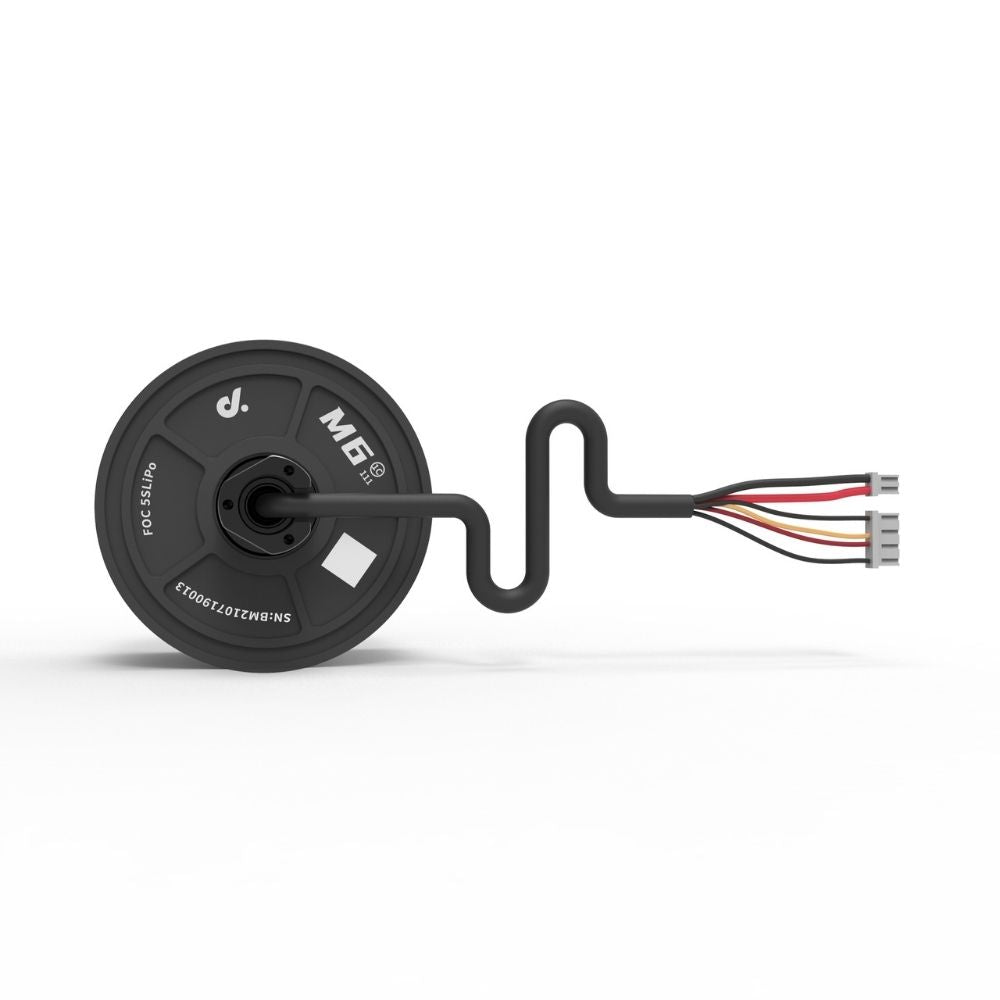
M0602C-112 is designed for small robotic bases that require balanced torque, speed, and installation efficiency. Compact mobile robots commonly use wheel diameters of 60–150 mm and operate at 0.1–1.5 m/s in indoor environments. A suitable motor must provide enough torque for acceleration and payload changes while maintaining low energy use. With many service robots operating 6–12 hours per day, motor efficiency, temperature control, and feedback accuracy strongly influence long-term performance.
Small robot bases often face limited space for batteries, sensors, controllers, and mechanical components. A motor with high output but large dimensions can reduce available room for other systems. The M0602C-112 approach focuses on compact integration, allowing robot designers to balance mechanical size with movement capability.
Torque and speed represent two connected performance factors in mobile robot design. Higher torque improves acceleration, climbing ability, and load handling, while higher speed reduces travel time across larger working areas. However, increasing one parameter often affects the other because motor current, electromagnetic structure, and thermal conditions must remain within practical limits.
A robot wheel converts motor torque into ground force through the wheel radius:
[
F=\frac{T}{r}
]
A smaller wheel produces higher ground force from the same torque. For example, a motor generating 1 Nm torque can produce about 25 N with a 40 mm wheel radius and about 16.7 N with a 60 mm wheel radius.
| Wheel radius | Force from 1 Nm torque |
|---|---|
| 40 mm | 25 N |
| 50 mm | 20 N |
| 60 mm | 16.7 N |
This relationship explains why many indoor robots use compact wheels. Since 2015, warehouse inspection robots, education platforms, and service robots have increasingly used smaller wheel modules to reduce chassis height and improve internal component placement.
A compact wheel system must also manage speed requirements. Indoor robots rarely need extremely high velocity because navigation accuracy and safety limits usually restrict operation speed. Many commercial indoor platforms move between 0.3 and 1.5 m/s, while outdoor autonomous vehicles may require higher speeds and larger torque reserves.
"A robot motor should match the working environment instead of operating at maximum speed during every movement cycle."
Acceleration places different requirements on motors compared with continuous cruising. During startup, the motor must overcome rolling resistance, wheel friction, payload inertia, and floor conditions. A delivery robot carrying 20–50 kg may require much higher torque during acceleration than during steady movement.
The torque requirement changes with robot weight and wheel size. A 30 kg mobile robot using 50 mm radius wheels requires approximately 6 Nm of wheel torque to generate 120 N of ground force before considering efficiency losses.
| Robot condition | Typical requirement |
|---|---|
| Light inspection robot | 5–15 kg |
| Education platform | 5–20 kg |
| Indoor delivery robot | 20–50 kg |
| Operation time | 6–12 hours/day |
The torque-speed balance also affects battery consumption. Motor power can be estimated from torque and rotational speed. A robot operating at higher speed requires more mechanical power, which increases battery usage during long missions.
For example, a robot running 8 hours per day may consume significantly more energy when operating near maximum speed compared with operating at a moderate speed range. Battery size, charging frequency, and operating schedule must be considered together during motor selection.
Compact motors are often used in applications requiring a low profile structure. The term low profile robot wheel motor describes motor systems designed for limited installation height while maintaining suitable torque output.
The mechanical layout of a robot base depends heavily on motor thickness. A reduction of 10–20 mm in wheel module height can provide additional space for batteries, computing boards, and sensors. In a chassis smaller than 300 mm wide, this space improvement can influence the entire internal arrangement.
Direct-drive configurations reduce the number of mechanical transmission parts between the motor and wheel assembly. Traditional motor systems with gear reduction may require additional shafts, gears, and mounting structures. These components can increase assembly complexity and may introduce backlash during low-speed movement.
"Removing extra transmission components can improve motion smoothness and reduce mechanical adjustment requirements."
Feedback control has become common in mobile robots after 2020 because accurate wheel information improves navigation performance. Encoders measure wheel rotation and allow controllers to adjust speed according to actual movement conditions.
Typical encoder specifications include:
| Encoder type | Resolution range | Common use |
|---|---|---|
| Incremental encoder | 500–10,000 counts/revolution | Speed regulation |
| Magnetic absolute encoder | 12–20 bit | Mobile robotics |
| Optical encoder | 16–24 bit | Precision equipment |
A 16-bit encoder provides 65,536 position values per revolution. At a wheel circumference of 314 mm, this allows measurement resolution below 0.005 mm per encoder count before considering mechanical factors.
Motor thermal performance becomes important when robots operate repeatedly throughout the day. Copper winding resistance increases as temperature rises, which increases electrical losses. A copper winding operating at 80°C has approximately 23% higher resistance than at 20°C.
Compact motors require efficient heat transfer because smaller housings provide less external cooling area. Designers often improve thermal behavior through optimized winding layouts, aluminum housings, and improved internal heat paths.
Small robot bases also require stable low-speed control. Robots used in hospitals, offices, and laboratories often move slowly near people and equipment. Poor torque control at low speed can create uneven movement, vibration, or inaccurate positioning.
A balanced motor system allows different control loops to operate at suitable frequencies:
| Control function | Typical frequency |
|---|---|
| Current control | 5–20 kHz |
| Speed control | 500–2000 Hz |
| Position control | 100–500 Hz |
| Communication update | 50–1000 Hz |
The separation between internal motor control and external robot communication improves system stability. The motor controller can process fast electrical adjustments locally while the robot computer handles navigation and task planning.
Motor selection for small robot bases also depends on operating cycles. A robot performing hundreds of starts and stops per day requires different characteristics from a platform moving at constant speed. For example, a hotel delivery robot introduced in the 2020s may complete dozens of trips daily, making acceleration efficiency important.
The M0602C-112 type of compact motor design fits applications where installation space, torque response, and speed control must work together. Robot manufacturers developing indoor platforms, inspection vehicles, and educational systems often evaluate motor performance according to payload, wheel size, battery capacity, and operating hours.
"A balanced torque and speed range allows small robots to maintain stable movement without using unnecessary energy."
The relationship between motor output and robot performance depends on matching specifications with real operating conditions. A motor that provides suitable torque at practical speeds can support reliable navigation, efficient battery use, and compact mechanical design across many small robotic platforms.